
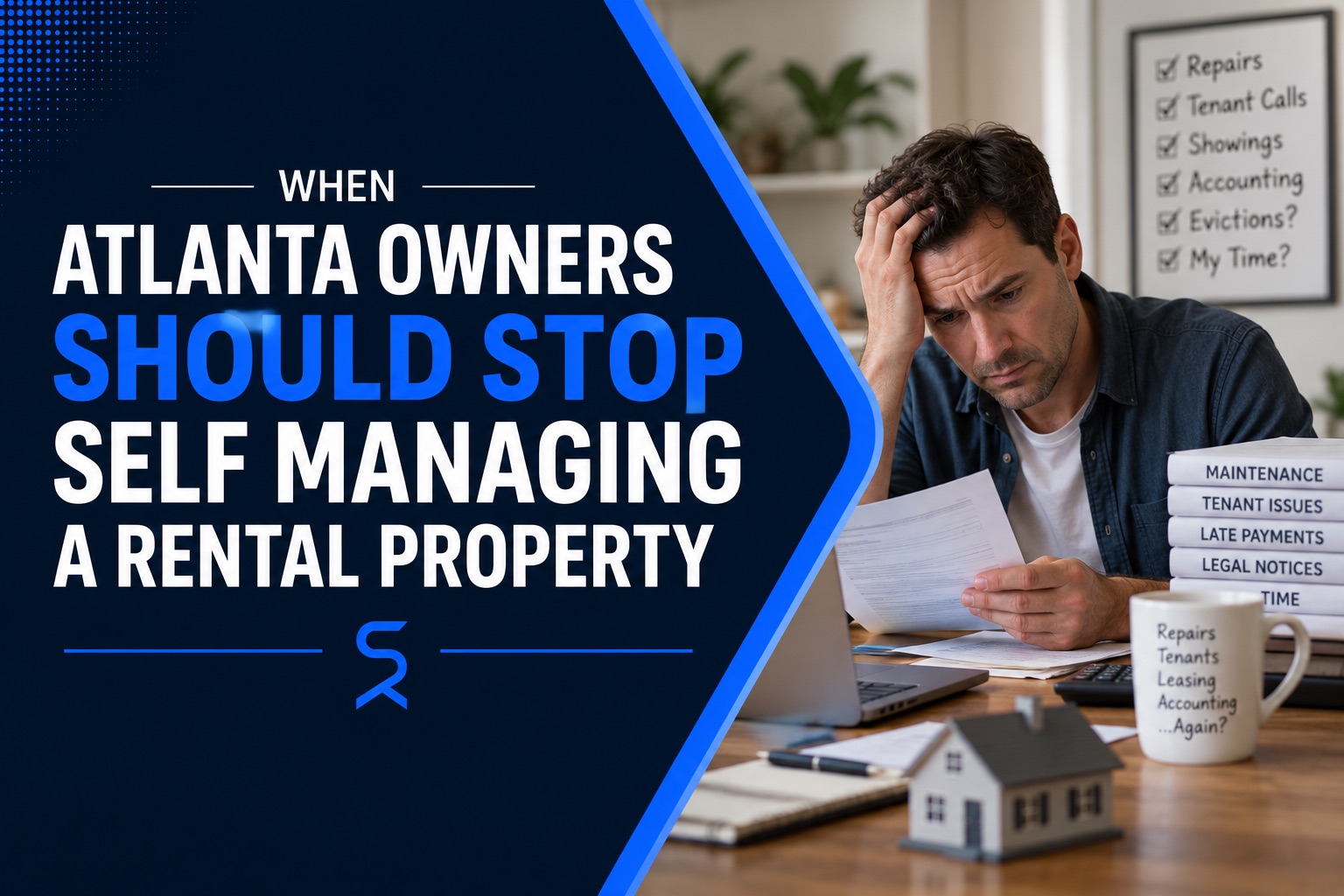
Self managing a rental property can work for a while. Many Atlanta owners start that way to keep control, save on management fees, or because the work looks simple. Then the calls start. Maintenance gets messy. Tenant questions eat into the day. Rent follow up turns uncomfortable.
The real question is not whether an owner can manage the property. It is when self management starts costing more than it saves.
Sign 1: The property is taking too much time
A rental property needs attention even when nothing looks urgent. Leasing, inspections, maintenance, rent collection, renewals, and accounting all take time. When that work starts filling evenings, weekends, or work hours, the cost is more than dollars.
Owners should look at the time honestly. If managing the property is pulling focus away from work, family, or higher value decisions, it may be time to hand off daily operations.
Sign 2: Maintenance feels reactive
Maintenance should not happen only when a tenant complains. A reactive approach leads to bigger repairs, longer delays, and frustrated tenants. Owners who are constantly coordinating vendors, approving invoices, and checking on repair status need a better system.
Sapir Realty's proactive maintenance management moves owners from scattered follow up to a clearer process.
Sign 3: Tenant conversations are becoming uncomfortable
Rent follow up, lease violations, repair complaints, late fees, and renewal conversations can be awkward when an owner manages their own property. The relationship gets personal, and that makes the lease harder to enforce consistently.
Professional management adds distance and structure. The owner is no longer the one chasing every answer. The process carries the conversation.
Sign 4: The owner is unsure what to document
Documentation matters in property management. Owners need lease records, payment history, maintenance notes, inspection photos, tenant communication, notices, and vendor invoices in one place. When those records are scattered, it gets harder to defend a decision later.
A management system creates a cleaner paper trail, one that matters when disputes, security deposit questions, or lease violations come up.
Sign 5: The owner wants better reporting
Rental property decisions should be made with numbers, not guesses. Owners need to see rent collected, expenses, maintenance invoices, vacancy costs, owner draws, and overall property performance clearly.
Sapir Realty's owner portal gives access to statements and reports covering income, expenses, rent payments, invoices, and performance.
When reporting is weak, owners are left with a feeling instead of a clear picture. That is not how to manage an asset.
Sign 6: The property needs a better long term plan
Some owners only think about the next repair or the next tenant. Stronger ownership means planning around rent positioning, tenant quality, maintenance timing, renewal timing, and portfolio goals. A property manager helps build that structure.
The right handoff should give an owner more clarity, not less.
Final thought
Atlanta owners should stop self managing when the property takes more time, creates more stress, and delivers less clarity than it should. Professional management should make ownership feel more organized, more accountable, and more focused on long term value.
If you are not sure whether your current process would hold up, schedule a 15-minute property review call with Sapir Realty, or call us directly.
Copy the rendered text above, not the Markdown/source. The large section titles are already rendered as headings here, so copying the rendered content into a rich-text editor is the version most likely to preserve the heading hierarchy.