

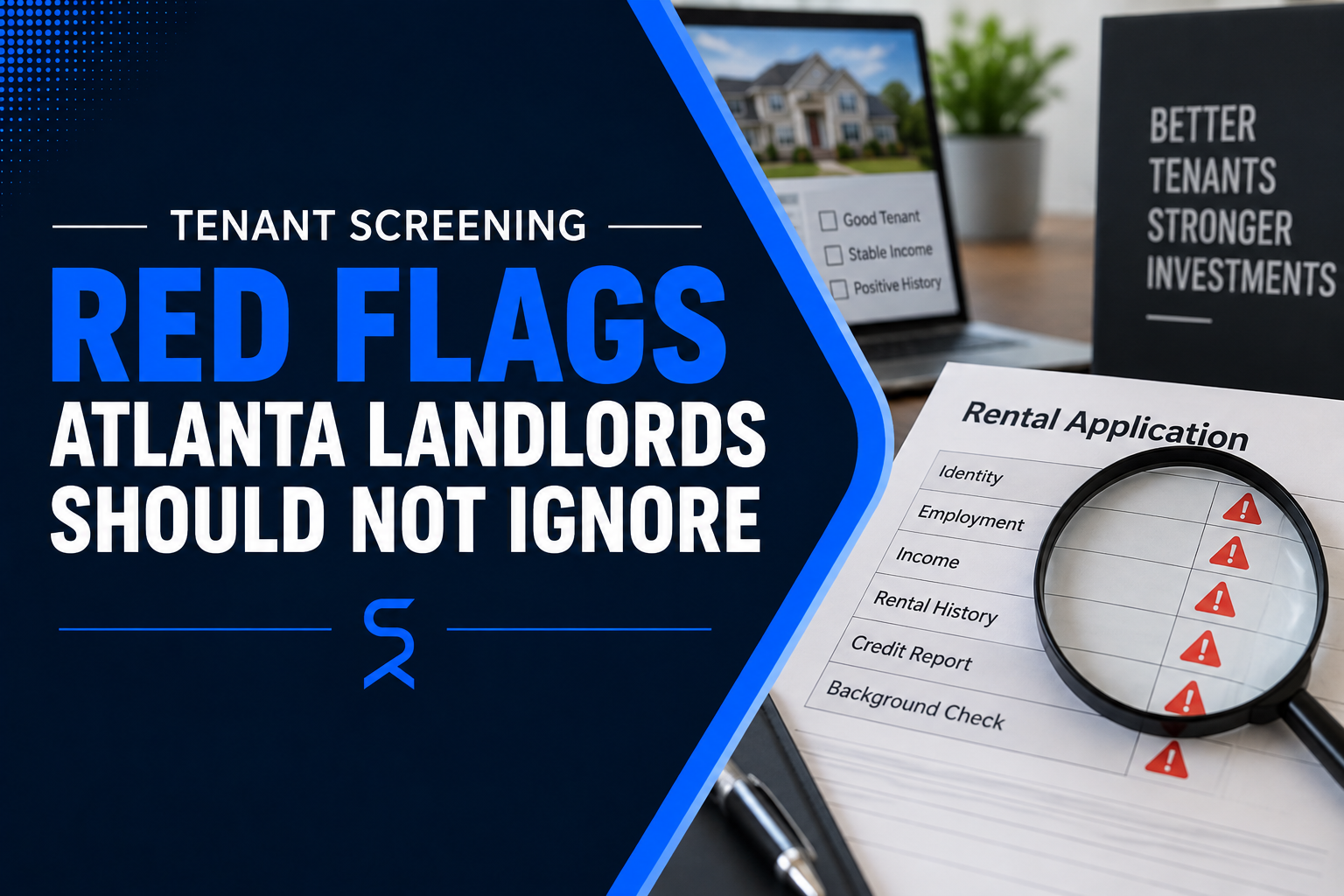
Tenant screening is one of the most important moments in rental property management. The wrong tenant can create late payments, property damage, lease violations, turnover, and legal headaches. The right tenant can support a steadier rental experience and better long term performance.
For Atlanta landlords, the risk is not only choosing a bad applicant. The bigger risk is using a screening process that misses important warning signs.
Red flag 1: Inconsistent application information
Small inconsistencies can matter. An applicant may list one employment history on the application and describe something different during follow up. They may leave gaps in rental history or provide incomplete contact information. One missing detail may be harmless, but repeated gaps deserve attention.
The best response is not guessing. The best response is verification.
Red flag 2: Income that cannot be verified
Income verification helps confirm whether the applicant can support the lease obligation. A landlord should look for reliable documentation and consistent income history.
If income cannot be verified, the owner may be taking on risk before the lease even starts.
Sapir Realty's tenant screening process includes employment and income verification, one of the core checks that supports stronger tenant selection.
Red flag 3: Poor rental history or missing landlord references
Rental history can reveal payment patterns, care for the property, lease compliance, and prior landlord experience.
Missing references or vague history can make the application harder to evaluate. A strong screening process checks beyond surface level information.
Landlords should avoid making decisions based only on a conversation. The record matters.
Red flag 4: Eviction history that needs context
An eviction record should be reviewed carefully and consistently under written criteria. Owners should avoid emotional decisions and should stay aware of fair housing and consumer reporting rules.
If a consumer report is used for screening, the Federal Trade Commission requires that landlords and property managers comply with the Fair Credit Reporting Act.
If an adverse action is taken based in whole or in part on a consumer report, the applicant must receive an adverse action notice. This can include:
- Denial
- Requiring a co signer
- Requiring a larger deposit
- Charging higher rent
Red flag 5: Criminal history handled without a clear policy
Criminal history screening needs care. A blanket refusal based on any criminal record can create fair housing risk.
The Fair Housing Act prohibits housing discrimination by direct providers of housing, including landlords and real estate companies, based on protected categories such as race, color, religion, sex, national origin, familial status, and disability.
Owners need written, consistent criteria and should avoid decisions that are vague, inconsistent, or based on assumptions.
Red flag 6: Rushing because the property is vacant
Vacancy pressure can make an owner lower standards. That is dangerous.
A fast approval can become expensive when the tenant misses payments, damages the property, or leaves early. The cost of waiting for a stronger applicant may be smaller than the cost of placing the wrong tenant.
Strong screening protects the owner before the lease is signed.
Final thought
Tenant screening should be structured, documented, and consistent.
Atlanta landlords should not ignore red flags around income, rental history, application consistency, eviction records, criminal history, and rushed decisions.
A better screening process protects the property long before a problem reaches the lease enforcement stage.